

Featured Speakers


Founder & CEO
Martine Rothblatt Ph.D., J.D., M.B.A.
Founder, Chairperson, and Chief Executive Officer
Dr. Rothblatt founded United Therapeutics in 1996 and has served as Chairperson and Chief Executive Officer since its inception. Previously, she created the satellite radio company SiriusXM. She is an inventor or co-inventor on nine U.S. patents, with additional applications pending. Her pioneering book, Your Life or Mine: How Geoethics Can Resolve the Conflict Between Private and Public Interests in Xenotransplantation, anticipated the need both for global virus bio-surveillance and a greatly expanded supply of transplantable organs.
Dr. Rothblatt has also analyzed the socio-ethical issues of human-like cyber competencies, as are emerging from large language models, in her 2014 book Virtually Human.

President
Dave Cavossa
Dave Cavossa is President of the Commercial Space Federation (CSF), officially joining on June 3, 2024. Mr. Cavossa is a long-time space and satellite industry executive working at the intersection of commercial space, government affairs, and government services. Cavossa also was bitten by the entrepreneurial bug in 2015 and started his own tech startup in the golf industry which he built, funded and sold recently to a competitor before moving back into Space industry. In addition to building his own Space 2.0 Consulting LLC, Dave was most recently lead for the U.S. government business at Agility Beyond Space (ABS) – a GEO FSS Satellite operator based in Dubai.
Dave likes to think he has seen the space industry from every perspective – government employee, sales and business development executive, operations manager, P&L owner, startup founder, consultant, and now 2 x time trade association leader. Throughout his career in the space and satellite industry Mr. Cavossa has held various leadership and staff-level roles. At the Satellite Industry Association (SIA) he served for 6 years as Executive Director and Chair of the Board. He also served in various executive roles with multiple satellite/defense contractors including Harris Corporation, CapRock Government Solutions, and Arrowhead Global Solutions. Mr. Cavossa also began his career in 2001 at NASA Headquarters in D.C., as an intern, working in the Legislative Affairs and International Relations offices.
Mr. Cavossa was a Space Policy Fellow and holds a Master’s Degree in Science, Technology, and Public Policy from The George Washington University Space Policy Institute. David completed an Exec Certificate Program in Business and Strategic Marketing from Northwestern University. David also obtained his Bachelor’s Degree in Physics, Astronomy, and Political Science from Wheaton College, in Massachusetts.
Mr. Cavossa lives in Warrenton, VA with his wife Ashley Basquin-Cavossa – a fellow trade association executive who leads political affairs for the Investment Company Institute (ICI) in D.C. They have two boys – Langdon (14) and Barrett (10) who keep them on travel baseball and flag football fields literally every week and weekend for 48 weeks a year.

Space Investor and Entrepreneur
Tejpaul Bhatia
Tejpaul Bhatia is a long time tech and space investor and entrepreneur. He was most recently the Chief Executive Officer at Axiom Space, where he drove over $1B in revenue through human spaceflight missions, foreign government deals, first of a kind commercial space deals, and US government contracts.
Prior to joining Axiom, he led External Strategic Narrative for the Office of the CIO at Google, where he met with C-suite executives at Fortune 100 corporations to discuss the future of work, supporting over $4B in sales pipeline.
Tej first joined Google as the Startup Ecosystem Manager in New York to establish and grow Google Cloud’s presence with startup founders, venture capital firms, and family offices; he previously was an Entrepreneur in Residence at Citi Ventures. As a startup founder for 10 years prior, Tej served as Chief Operating Officer for an educational technology company, Explain Everything, CEO of video chatting platform Chatwala, and CEO of Kaptur, an app that enables users to instantly aggregate all photos taken at any event in seconds. Before founding Kaptur, Tej was Senior Manager of Product and International Strategy for ESPN, where he launched ESPN3 in the US, Mexico, Brazil, and Europe.
Tej holds a bachelor’s degree in computer science from Columbia University. He has served in non-profit leadership and board positions at the Make-A-Wish Foundation and the Startup Leadership Program.

Professor of the Practice of International Affairs
Scott Pace
Dr. Scott Pace is the Director of the Space Policy Institute and a Professor of the Practice of International Affairs at George Washington University’s Elliott School of International Affairs. In addition, he formerly served as the Director of the International Institute of Science and Technology Policy as well as the Master of Arts program in International Science and Technology Policy. Dr. Pace is also a member of the faculty of the Trachtenberg School of Public Policy and Public Administration. His research interests include civil, commercial, and national security space policy, and the management of technical innovation.
Dr. Pace rejoined the faculty of the Elliott School in January 2021 after serving as Deputy Assistant to the President and Executive Secretary of the National Space Council from 2017-2020. From 2005-2008, he served as the Associate Administrator for Program Analysis and Evaluation at NASA. Prior to NASA, Dr. Pace was the Assistant Director for Space and Aeronautics in the White House Office of Science and Technology Policy (OSTP). From 1993-2000, Dr. Pace worked for the RAND Corporation’s Science and Technology Policy Institute (STPI). From 1990 to 1993, Dr. Pace served as the Deputy Director and Acting Director of the Office of Space Commerce, in the Office of the Deputy Secretary of the Department of Commerce. He received a Bachelor of Science degree in Physics from Harvey Mudd College in 1980; Master’s degrees in Aeronautics & Astronautics and Technology & Policy from the Massachusetts Institute of Technology in 1982; and a Doctorate in Policy Analysis from the RAND Graduate School in 1989.
Dr. Pace received the Order of the Rising Sun with Gold and Silver Stars from the Government of Japan in 2021, the Office of the Secretary of Defense Group Achievement Award in 2020, the NASA Outstanding Leadership Medal in 2008, the US Department of State’s Group Superior Honor Award (GPS Interagency Team) in 2005, and the NASA Group Achievement Award (Columbia Accident Rapid Reaction Team) in 2004. He has been a member of the US Delegation to the World Radiocommunication Conferences in 1997, 2000, 2003, and 2007. He was also a
member of the US Delegation to the Asia-Pacific Economic Cooperation Telecommunications Working Group, 1997-2000. More recently, he has served as a member of the U.S. Delegation to the UN Committee on the Peaceful Uses of Outer Space in 2009, 2011-17, and 2022-2024. Dr. Pace was a member of the NOAA Advisory Committee on Commercial Remote Sensing (ACCRES) from 2012-2017 and was the Vice-Chair. Dr. Pace is a former member of the Board of Trustees, Universities Space Research Association, a Member of the International Academy of Astronautics, an Associate Fellow of the American Institute of Aeronautics and Astronautics, and a Fellow of the American Astronautical Society.

Former NASA Associate Administrator for Technology, Policy, and Strategy
Bhavya Lal
Check Back Soon
Acting Associate Administrator for International and Interagency Relations
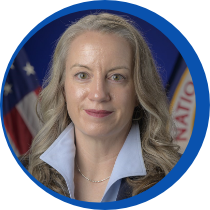
Meredith McKay
Meredith McKay serves as the acting associate administrator in the Office of International and Interagency Relations (OIIR). OIIR is responsible for executive leadership and direction of NASA’s international and interagency activities and partnerships for NASA’s mission areas; interactions between NASA and other executive branch offices, departments, and agencies, including the National Security Council, the Department of State, National Space Council, and the Office of Science and Technology Policy; and administration of export control and international technology transfer programs. In addition to her acting role, McKay officially holds the position of deputy associate administrator for the office.
McKay began her NASA career over 20 years ago with positions in the Policy and Plans and International Space Station Divisions of the Space Operations Mission Directorate. After joining OIIR, she served in positions of increasing responsibility, including as a regional team lead and division director. She also served as the agency’s acting deputy chief of staff, where she helped lead the coordination and execution of initiatives, programs, and policies in critical areas of concern to the acting administrator and agency leadership. Prior to joining NASA, McKay served in the arts and culture non-profit sector and in political campaign organizations.
She has received numerous group and individual achievement awards, including the NASA Exceptional Service Medal.

Former Associate Administrator, NASA Science Mission Directorate
Thomas Zurbuchen
Thomas H. Zurbuchen, known in the space community as Dr. Z, is a Swiss-American astrophysicist, leader, and innovator.
Since June 2023, he is the leader of the ETH Space initiative. His stated goals are to build the world’s best Master’s programme in space science and technology, improve on the entrepreneurship programme to enable more Swiss startups, and to assist space sciences. The Master’s programme took on its first students in September 2024.
Prior, he was the longest continually serving Head of Science at NASA from October 2016 through 2022, the leading program worldwide for doing science in and from space. During this time, he drove all aspects of leadership in space science, leading 130 missions with 37 launches. His achievements include bringing the international James Webb Telescope to launch, overseeing two Mars landings – the Perseverance rover and the first controlled flight away from the Earth with the Ingenuity helicopter – and developing the Parker Solar Probe, a mission to touch the Sun. He also conceived and led the Earth System Observatory, an advanced multi-platform observatory that creates a 3D holistic view of the Earth, from bedrock to atmosphere, and oversaw humanity’s first successful attempt at moving a celestial object, using a spacecraft impact.
Dr. Zurbuchen was born in Switzerland in 1968, became the first college graduate in his family, studied physics at the University of Bern with a minor in mathematics, and was awarded his PhD in 1996 with a thesis entitled “Turbulence in the interplanetary medium and its implications on the dynamics of minor ions”.
In that same year, Dr. Zurbuchen left for the US and joined the University of Michigan as a research associate, where, in 2008, he was made Professor of Space Science and Aerospace Engineering. His scientific research focuses on solar and heliospheric physics, experimental space research, and space systems. He is also well known for his work on innovation and entrepreneurship. During his time at University, Dr. Zurbuchen co-founded the Center for Entrepreneurship, which was recognized as the US leading undergraduate program. Over the course of his career, Dr. Zurbuchen built multiple space instruments, such as the MASS sensor on NASA’s WIND spacecraft, launched in 1992, and the Fast Imaging Plasma Spectrometer, for which he served as team leader, on NASA’s Messenger, the first spacecraft to orbit Mercury.

Founder
James Green
Founder, Space Science Endeavors, Founder, Metavisionaries US
Dr. James Green has worked at NASA for 42 years before retiring in December 2022. He received his Ph.D. in Physics from the University of Iowa in 1979 and worked at Marshall Space Flight Center, Goddard Space Flight Center, and NASA Headquarters. During Jim’s distinguished career at NASA, he has been NASA’s Chief Scientist and was the longest serving director of NASA’s Planetary Science Division with the overall programmatic responsibility for 31 NASA missions and instrument contributions on other Agency missions. Some of these mission highlights include the New Horizons spacecraft flyby of Pluto, the Juno spacecraft insertion at Jupiter, and the landing of the Curiosity rover on Mars, just to name a few. Jim has received NASA’s Exceptional Achievement Medal and the Distinguished Service Medal. He has written over 125 scientific papers in refereed journals (h-index of 40) and over 125 technical and popular articles. In 2015, Jim coordinated NASA’s involvement with the film The Martian. In 2017 Asteroid 25913 was renamed Jamesgreen in his honor. He now teaches students around the world about space and planetary science in the Metaverse.

Mission Technology Solutions
Senior Vice President
Todd May
Todd May is the senior vice president of KBR’s Science and Space (S&S) business unit. He leads a diverse team of 4,000+ employees worldwide that generates $1.2 billion in annual revenue and provides world-class research, engineering and technology development, information systems and operations and missions solutions. S&S serves customers of national and strategic importance, such as NASA, the Department of Defense, the National Oceanic and Atmospheric Administration, the U.S. Geological Survey, the Department of Transportation and the Defense Threat Reduction Agency. Prior to this role, May served as the vice president of KBR’s Systems Analysis and Services Division.
Culminating a 28-year career, May retired from NASA as the director of its Marshall Space Flight Center (MSFC), where he led one of NASA’s largest field installations with nearly 6,000 civil service and contractor employees and an annual budget of over $3 billion. He oversaw a broad portfolio of human spaceflight, science and technology development missions.
Over his career, May has held numerous program management and leadership positions, including program manager of the Space Launch System; deputy associate administrator in the Science Mission Directorate at NASA headquarters; program manager of the Discovery and New Frontiers robotic exploration programs; program manager of the Space Launch System; deputy associate administrator in the Science Mission Directorate at NASA headquarters; program manager for the Discovery and New Frontiers robotic exploration programs; and program manager of the Lunar Precursor Robotics Program. He was a key leader on the Gravity Probe B mission to study Einstein’s theory of relativity and served as project manager for the International Space Station Quest airlock development. He also worked on the Space Station Russian integration team and began his NASA career in the Materials Laboratory at MSFC.
May holds a bachelor’s degree in materials engineering from Auburn University. His awards include NASA’s Exceptional Achievement Medal, Outstanding Leadership Medal and Distinguished Service Medal and the Presidential Rank Award of Meritorious Executive. In 2014, he received Aviation Week’s Program Excellence Award, as well as the Rotary Stellar Award in recognition of the SLS team’s many accomplishments. In 2016, May was inducted into the Alabama Engineering Hall of Fame. He is a recipient of the AIAA Von Braun Award for Excellence in Program Management. In 2017, he received the American Society for Engineering Management’s Engineering Manager of the Year Award. In 2018, he received the Aerospace States Association National Award for Distinguished Service and the National Space Club’s Astronautics Engineer Award. May has been named a Distinguished Engineer by his alma mater, an Associate Fellow of the AIAA, and a Fellow of the American Astronautical Society.

Deputy Administrator
Lori Garver
The Honorable Lori Garver was the Deputy Administrator of NASA and leader of the Agency’s transition team from 2008 – 2013. Garver has since served as the General Manager of the Air Line Pilots Association and CEO of Earthrise Alliance.
Garver is currently an Operating Advisor at Bessemer Venture Partners and a Senior Fellow at Harvard Kennedy School’s Belfer Center for Science and Technology. She serves on the board and as an advisor to several commercial aerospace interests including Sierra Space, World View, K2 Space and Hydrosat.
Earlier in her career, Garver founded Capitol Space and the AstroMom project – which led her to Star City where she trained and received her medical certification for a commercial spaceflight on a Soyuz mission to the International Space Station. She has served as an appointed member of the NASA Advisory Council and the FAA’s
Commercial Space Transportation Advisory Council, President of Women in Aerospace and the American Astronautical Society, and a member of the Board of Directors of Maxar Technologies.
In addition to being a co-founder and board member of the Brooke Owens Fellowship, Lori has received numerous awards including AIAA’s 2022 Public Service Award, Women in Aerospace’s 2020 Lifetime Achievement Award and three NASA Distinguished Service Medals. Her memoir, Escaping Gravity, My Quest to Transform
NASA and Launch a New Space Age was released in 2022.

former Associate Administrator, FAA Office of Commercial Space Transportation
Kelvin Coleman
Founder & Principal of Baines Advisory Group & Former FAA Associate Administrator for Commercial Space Transportation
Baines Advisory Group
Kelvin B. Coleman is the Associate Administrator for Commercial Space Transportation (AST) at the Federal Aviation Administration (FAA). In this role, he leads the office responsible for enabling safe space transportation and protecting the health and safety of the public, the safety of property, and the national security and foreign policy interests of the United States.
Mr. Coleman was named associate administrator in 2022, and prior to that had served as acting associate administrator or deputy associate administrator since 2017.
During this time, he has overseen regulation of the commercial space industry, and development and implementation of FAA regulations and services necessary to meet a tremendous growth in stakeholder needs as commercial companies provide space transportation to civil, military, international and private customers. In 2023, his office licensed 124 launch and re-entry operations, a 48 percent increase just from a year earlier.
Mr. Coleman has prepared the AST organization to meet these growing industry demands by establishing strategic priorities, restructuring the organization for increased efficiency and agility, acquiring advanced tools, and advocating for additional resources.
Mr. Coleman has also led efforts to establish clear authorities involving commercial space activity by working closely with other agencies including the National Space Council, the National Transportation Safety Board, NASA, the U.S. Space Force, and the Departments of Defense and Commerce to ensure transparency and clarity among all stakeholders. He has led global leadership initiatives to educate and collaborate with numerous international allies seeking to grow their space services.
Prior to joining the FAA, Mr. Coleman worked for the U.S. Naval Air Systems Command (NAVAIR) as a systems engineer, and as a guidance, navigation, and control engineer for several weapon system acquisition programs.
Mr. Coleman earned a Bachelor of Science degree in electronics and computer engineering from George Mason University and a master’s in business administration from Marymount University.

Former Chief Economist
Alex MacDonald
Alexander MacDonald served as NASA’s first chief economist. In this role, he helped to establish NASA’s Moon to Mars strategy and Artemis and served as the program executive for the International Space Station National Laboratory. He is recognized as an expert on U.S. space policy and private-sector space activities. He was formerly the senior economic advisor in the Office of the Administrator, and the founding program executive of NASA’s Emerging Space Office. He is a former staff member at NASA’s Jet Propulsion Laboratory, former research faculty member at Carnegie Mellon University, and has worked for the Universities Space Research Association while at NASA’s Ames Research Center. He received his undergraduate degree in economics from Queen’s University in Canada, his master’s degree in economics from the University of British Columbia, and was a Clarendon Scholar at the University of Oxford, where he obtained his doctorate on the long-run economic history of U.S. space exploration. He was also an inaugural TED senior fellow and received the AIAA History Manuscript of the Year Award in 2016 for his book The Long Space Age: The Economic Origins of Space Exploration from Colonial America to the Cold War, published by Yale University Press. He was awarded the NASA Exceptional Service Medal in 2024.

Executive Vice President
Courtney Stadd
Executive Vice President
Beyond Earth Institute
For 45+ years, Courtney’s career path has been a mix of senior government leadership and corporate executive positions – primarily focused on encouraging the removal of policy and regulatory barriers to the emergence of a competitive American led commercial space marketplace. In the government, he held a senior policy position within the Office of the Secretary of Commerce (where he helped establish the Office of Space Commerce), the U.S. Department of Transportation (where he was an early Director of what is now the licensing office for commercial rockets in the FAA and issued one of the first licenses for a commercial launch vehicle and advocated non-government owned and operated spaceports (former member of the Boards of Space Florida and the Alaska Aerospace Development Corporation), worked directly for three NASA Administrators, including as Chief of Staff and White House Liaison. As a senior Director for Commercial Space, White House Space Council, Courtney helped draft numerous Presidential directives encouraging a competitive commercial space industry, including directing NASA to purchase commercial space services.
In the private sector, he was associated with pathfinder industries including GPS, high res commercial satellite imagery, commercial launch vehicles, telecommunications, commercial expandable modules (Bigelow Aerospace).
He is President, Washington Space Business Roundtable, a 35 year volunteer non-profit that invites senior government and corporate officials to discuss issues and challenging facing the space industry, as well as donate to STEM programs in underserved schools; Executive Vice President, Beyond Earth Institute, a non-partisan think tank dedicated to the technical, policy and regulatory challenges associated with large scale off planet human communities, and a member of the American Institute of Aeronautics and Astronautics’ Public Policy Committee.
In both official and private capacities, various Congressional committees have invited him to testify on a range of space related issues.
He is a recipient of NASA’s Distinguished Service Medal.

CEO & Chief Architect
Jim Keravala
Jim Keravala is co-founder and Chief Executive Officer of OffWorld, Inc. He has undertaken leadership roles in innovation in multidisciplinary areas such as aerospace engineering, space systems, robotics and machine intelligence. OffWorld is the culmination of over a decade of architectural planning and development of autonomous robotic systems operating in extreme
environments for mining and construction on Earth and on the Moon. OffWorld has deployed autonomous mining robots and directed energy preconditioning robots in pilot programs in live underground mines and are expanding our species of mining robots.
Experience for seven years managing launch programs and space access with Russian and Ukrainian launch vehicles, subsequently joining Surrey Satellite Technology as Launch Manager for six years overseeing over a dozen successful orbital launches on Russian, European and US launch vehicles. Participated in satellite design, integration engineering and program management as part of this process. Jim cofounded Shackleton Energy and developed architectures for mining in space using propellant depots and reusable transport systems utilizing lunar polar water for an assured continuous supply of fuel in space. He also cofounded the OffWorld Consortium building a space based solar power station fleet and seeded by Middle East sovereign funding.
Resulting from a collaboration with NASA Ames, Mr Keravala co-founded a synthetic biology program to enable over-expression of enzymes in bioleaching scenarios for terrestrial and space mining. Jim studied aerospace engineering, spacecraft engineering and physics at University of London, Surrey University, Aachen Technical University and International Space University, was previously faculty at Singularity University and is on advisory boards and Board of Directors of a number of space institutes including Board Member of the National Space Society, The International Moonbase Alliance and the Moon Village Association. Jim is an Academician of the International Academy of Astronautics, Fellow of the British Interplanetary Society and Member of the International Institute of Space Law, and is Associate Editor for the New Space Journal. He is a member of the Society for Mining, Metallurgy and Exploration. He is also on the Board of the Global Mining Standards Group Governance Committee.

Founder and CEO
Kevin O’Connell
Kevin O’Connell is a recognized expert on space commerce, the global space economy, international intelligence and U.S. national security matters. For almost four decades, he has focused on space commercialization and technological competitiveness and how to advance them in global markets. He has also focused on how these innovations impact U.S. and allied national security.
His U.S. government assignments include the Department of Commerce (SES), The Department of Defense, The Department of State, The National Security Council, The Office of the Vice President, and The Office of the Director of Central Intelligence. Within the private sector, Mr. O’Connell was a senior research analyst at RAND and was the first Director of RAND’s Intelligence Policy Center. In 2007, he founded Innovative Analytics and Training, LLC, a consulting firm specializing in assessing high-tech market areas including geospatial markets, cloud computing, and cyber analytics.
Mr. O’Connell’s most recent role was Director of the Office of Space Commerce (OSC) within the U.S. Department of Commerce. He was the principal architect of outreach to U.S. private space companies to facilitate innovation and encourage increased market growth and viability. He focused on the growing role of the private sector in space, encouraged new space partnerships, worked to ensure the competitiveness of the U.S. commercial space industry, and advanced American leadership in space safety and sustainability. Mr. O’Connell testified before Congress on space policy and regulatory issues, American space competitiveness, and the growth of space commerce. He was awarded the Vice President’s Dedicated Service Award for his support to the National Space Council.
Mr. O’Connell also expanded international outreach on space commerce issues with a wide range of U.S. allies and partners, especially to compare notes on regulation, encourage new partnerships and advance space safety and sustainability. His overseas space engagements included participation in the U.S.-Japan Comprehensive Space Dialogue, as part of a Space Delegation to Luxembourg, and including high-level discussions with the EU, India, Thailand, Singapore, Indonesia, and Commonwealth partners.
Mr. O’Connell is a recognized expert on the policy, security, and commercial aspects of satellite remote sensing technologies and markets. He served as the Executive Secretary of the Independent Commission on the National Imagery and Mapping Agency (NIMA) in 2000 and later as an advisor to the Director, National Geospatial-Intelligence Agency. He was a long-standing member of NOAA’s federal advisory committee, ACCRES, including as Chair between 2012 and 2016.
Mr. O’Connell has been a regular author on space commerce issues. He contributed the foreword to “Space Policies for the New Space Age: Competing on the Final Economic Frontier,” by Bruce Cahan and Mir Sadat (NewSpace New Mexico, December 2020). He co-authored Commercial Observation Satellites: at the Leading Edge of Global Transparency (ASPRS/RAND, 2000). He taught graduate courses in Georgetown University’s School of Foreign Service and the RAND Graduate School for many years and has lectured at academic and research organizations around the world.

Senior Fellow in Defense Studies
Dr. Peter Garretson
Dr. Peter Garretson is a Senior Fellow in Defense Studies with the American Foreign Policy Council and co-director if its Space Policy Initiative and host of the Space Strategy Podcast.
He was previously the director of Air University’s Space Horizons Task Force, an Air Force think tank for space, and was a founder and deputy director of the U.S. Space Force’s Schriever Scholars Strategy Seminar, America’s premier military space strategy program.
He is the author of Scramble for the Skies: The Great Power Competition to Control the Resources of Outer Space and The Next Space Race: A Blueprint for American Primacy, and Space Shock: 18 Threats That Will Define Space Power.Check Back Soon

Human Exploration and Spaceflight Expert
Melanie Saunders
Melanie Saunders is an expert for the Aerospace Corporation in human spaceflight programs. Prior to joining Aerospace, she was Senior Director for Global Partnerships for Blue Origin’s Space Systems Division focused on international partnerships for the company’s commercial space station Orbital Reef. Before Blue Origin, Saunders spent most of her career at NASA in various roles. She spent 5 years at NASA Headquarters as NASA’s Deputy Associate Administrator, the Acting NASA CFO and the agency’s Chief Resilience Officer. As Deputy Associate Administrator, she shared in managing the Agency’s 17000+ civil servants and all aspects of the agency’s functions, supporting the NASA Associate Administrator, NASA Administrator and Deputy Administrator in management and oversight of the Agency’s then $20B+ portfolio of programs, projects and operations.
Saunders spent the bulk of her NASA career at NASA’s Johnson Space Center in Houston, one of NASA’s largest installations, with nearly 11,000 civil servants and contractor employees and an annual budget of approximately $5 billion. While there, she served in several roles overseeing a broad portfolio of human spaceflight activities as the Associate Program Manager for the International Space Station during the most intensive phases of assembly, and later as the Associate Center Director and the Acting Deputy Center Director. She began her NASA career negotiating international agreements and contracts and managing international policies and partnerships in the International Space Station Program. Prior to joining NASA she practiced commercial litigation and is a member of the California Bar and the Florida Bar, inactive status.

Vice President Government Affairs
Rich Leshner
Over 20 years experience in the space sector, including time in government (NASA), the nonprofit sector, at aerospace start-ups, and as a consultant. Previously worked at the White House, leading the development of National Space Policy, and was the first Washington, DC hire at Planet Labs.
Elizabeth Sanchez Chang is a 3L at American University Washington College of Law and a 2025 Matthew Isakowitz Scholar, with space law experience at companies including Vast and Blue Origin.
She serves as Managing Editor for the Beyond Earth Leadership Council Working Group Reports and is the Founder of the American Space Law Foundation, which is launching the nation’s first American Space Law–based moot court competition this spring to help shape the next generation of American space law through education, community-building, and institutional development.
Her work is guided by a long-term commitment to helping pioneer American space law, ensuring the commercial space sector grows responsibly while pursuing its boldest ambitions.

Founder & CEO
Olivia Gámez Holzhaus
Founder & CEO
Rhodium Scientific
United States
Olivia Gámez Holzhaus is Founder & CEO of Rhodium Scientific, America’s first commercial space biotech company. Since 2014, she has enabled research from labs to the ISS, developing the QuIC Space Process™ and scalable in-orbit facilities. Rhodium Scientific partners with the DoD, FDA-regulated industry, and global research institutions. Olivia holds a B.S. in Microbiology, an M.S. in Business, advises space organizations, and is an award-winning sailor.

President & Co-Founder
Steven Wolfe
Check Back Soon

Novel and Exponential Technology (NExT) Lead
Raquel Buscaino

Founder & CEO
Skyler Chan
Skyler graduated early from Berkeley EECS to make humanity interplanetary. Previously he built vehicle software at Tesla, built a NASA funded 3D-printer launched into space, and authored at the largest space conference. Air Force-trained pilot at 16.

Human Factors Technical Advisor and Human Health and Performance Fellow
Dr. Ryan Amick
Dr. Ryan Amick is a Human Factors Technical Advisor and Human Health and Performance Fellow at Johnson Space Center in Houston, TX. Here, he applies his technical expertise to multiple NASA programs through high-level research, design, and mission development activities. He currently supports the EVA and Human Surface Mobility Program where he provides Human Factors and Human-Systems Integration guidance to the development of the Exploration EVA System, and its integration with the larger Spaceflight Systems Architecture. Dr. Amick additionally serves as the Habitability Scientist for NASAs Human Research Program where he investigates how the design of vehicles, habitats, and spacesuits impact astronaut crew health and performance.
Dr. Amick has previous work and research experience in aircraft flight deck design, injury biomechanics, wearable technology development, materials science, implantable cardiovascular medical devices, as well as the development of novel medical diagnostic technologies.
Dr. Amick holds a Ph.D. in Industrial and Manufacturing Engineering, with an emphasis in Human Factors Engineering and Industrial Ergonomics. He is employed with KBR.

CEO
Saleem Miyan
Saleem Miyan is CEO – at Max Space, headquartered in Houston, TX.
His early corporate career was with Philips Electronics where, during his 8 years tenure he headed Philips Seminconductors’ (now NXP) international IoT unit (RFID, NFC and Smartcard chip business’). He closed off his time at Philips Amsterdan running a division of their Global Strategic Alliances where he worked on numerous award-winning innovations with global industry allies.
He went on to join the Board of Checkpoint Systems Inc. (NYSE:CKPT) in New Jersey, USA where he was responsible for the groups international growth and acquisitions. He went on to start up a new disruptive technology business which developed an industrial tracking and GPS/Satellite monitoring solution and, after winning a prestigious contract with the US DoD, the company’s IP and licenses were acquired by Savi, a Lockheed Martin Corporation company. He was appointed to the Board of Digicore International a South African public company, one of the largest pioneers in vehicle, fleet and high value asset tracking. After successfully developing their growth across international territories and leading three acquisitions, the company was acquired by Novatel Wireless based out of San Diego, California.
Saleem was an executive board director of a Jordanian Investment fund, operating as an investor and as a non-exec director for their portfolio of high-tech startup businesses. He was on the Board of a large UK automotive insurance underwriter where he was responsible for over 1200 members of staff across 5 operating companies. Under his stewardship, the Company was awarded a top 15 position in the ‘Sunday Times 100 Best Companies to Work For’, three years running.
Saleem has spoken at and chaired numerous worldwide conferences, analyst briefings, conducted live TV interviews and interviewed for a number of international technology documentaries. He has presented to over 50 Congressmen and President Obama’s government officials at The White House. In addition to this he has also written articles and whitepapers and is a recognized speaker at conferences around the world on patented technology development, mission critical deployments and new disruptive technologies.

President
Grigorii Trubkin
Grigorii Trubkin leads Hypernova Fund, a VC firm dedicated to deep tech and the commercialization of the space economy. Building on a successful investment track record from his previous fund 1802 Ventures, now focused on scaling high-potential startups that are building the critical infrastructure for life beyond Earth. Passionate about bridging the gap between visionary space innovation and sustainable, commercial business models.

Chief Economist
George Pullen

Co-founder and former CEO
Charles Miller
Charles Miller is a serial space entrepreneur and senior commercial space executive who has repeatedly delivered breakthrough results over 3 decades. Most recently, Miller served as co- founder and CEO of Lynk Global, Inc. (Lynk) the creator of satellite-direct-to-standard-phone (sat2phone) that has become the hottest category in the satellite industry, where he serves as Chairman of the Board.
Prior to co-founding Lynk, Miller was:
Served as a member of NASA transition team for Trump-Pence in Dec. 2016-Jan. 2017. Miller recommended that Congressman Jim Bridenstine be named NASA Administrator. Rep. Bridenstine was confirmed as NASA administrator on April 19, 2018.
- Co-founding CEO of Nanoracks, which delivered more than 700 commercial satellite payloads to space, before being sold to Voyager Space Holdings in 2021.
- Founder and President of ProSpace, which persuaded Congress to pass the Commercial Space Act of 1998. This law forced NASA to contract for commercial space station cargo services, leading to two early NASA contracts for SpaceX at a critical time, $396 million in 2006, followed by $1.6 billion in 2008.
- Principle Investigator for the “Fast Space” study for US Air Force in 2017, which led directly to the creation of the DOD’s Space Development Agency in 2019. SDA recently announced a 5-year budget of $25 billion.
- Principle Investigator of the “Evolving Lunar Architecture” study for NASA in 2015, which led to the creation of NASA’s first commercial lunar lander program and over $6 billion in fixed- price contracts for SpaceX and Blue Origin in 2021 and 2023.
- Served as a member of NASA transition team for Trump-Pence in Dec. 2016-Jan. 2017. Miller recommended that Congressman Jim Bridenstine be named NASA Administrator. Rep. Bridenstine was confirmed as NASA administrator on April 19, 2018.
Principle Investigator for the “Fast Space” study for US Air Force in 2017, which led directly to the creation of the DOD’s Space Development Agency in 2019. SDA recently announced a 5-year budget of $25 billion.
Principle Investigator of the “Evolving Lunar Architecture” study for NASA in 2015, which led to the creation of NASA’s first commercial lunar lander program and over $6 billion in fixed- price contracts for SpaceX and Blue Origin in 2021 and 2023.

Associate Provost for Space Commercialization and Strategy
Greg Autry
Space Czar
UCF
Dr. Greg Autry is the Associate Provost for Space Commercialization and Strategy. He will lead the college’s efforts to deliver Executive and MBA programs in Space Commercialization while helping the university craft and implement a roadmap for its space efforts.
Before joining UCF, Dr. Autry was the Director and Clinical Professor of Space Leadership, Policy and Business at the Thunderbird School of Global Management at Arizona State University. He serves as the Vice President for Space Development at the National Space Society and Chairs the Business Case sub-committee for NASA’s In Space Production Applications program (InSPA) which sends manufacturing experiments to the International Space Station.

Director, Growth and Capture, Space Systems
Alan Campbell
In his current role, Alan is responsible for leading business development, technical strategy, shaping, capture, and proposal development across Civil, Commercial, and National Security Space customers. Alan has led Draper’s work on multiple lunar landing programs, including NASA’s CLPS and HLS efforts. In addition, he’s led satellite servicing, Earth re-entry, spacecraft GN&C, and resilient computing development activities including NASA, commercial, and DoD customers, continuing Draper’s pioneering space heritage dating back to the development of the Apollo Guidance Computer.

Senior Staff Writer
Jeff Foust
Jeff Foust is a senior staff writer for SpaceNews, joining the publication in 2014. He covers civil and commercial space topics, ranging from NASA programs to developments among entrepreneurial space companies. He has extensive experience writing about space policy, commercial space, and related topics. In 2003, he started The Space Review, a weekly publication of longform articles and commentary on a wide range of space topics that continues to operate to this day. He earned a Ph.D. in planetary sciences from the Massachusetts Institute of Technology in 1999 and a B.S. with honors in geophysics and planetary science from the California Institute of Technology in 1993. He received the Press Award from the National Space Club and Foundation in 2018.

First Secretary and Space Attaché at the Embassy of Japan in the United States
Yosuke Kaneko
Kaneko serves as First Secretary and Space Attaché at the Embassy of Japan in the United States, advancing U.S.-Japan cooperation in space. He has over 20 years of experience at JAXA (Japan Aerospace Exploration Agency), including at Headquarters, contributing to human spaceflight programs such as the International Space Station, Artemis, and deep space science missions, in collaboration with industry, academia, government, and international partners.
In addition to his diplomatic role, Kaneko serves as President of the Interplanetary Networking Special Interest Group (IPNSIG), a U.S. 501(c)(3) non-profit organization, leading global discussions on the development of the Interplanetary Internet—a common, open, and shared network essential for humanity’s sustainable activities in space. He is also the founder of the Dynamic Coalition on the Interplanetary Internet under the UN Internet Governance Forum, advocating for inclusive governance and international cooperation in space communications.

CSO
Heath Mills
Check Back Soon
United States Congressman
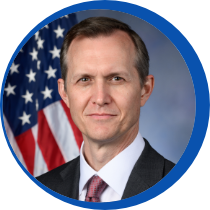
George T. Whitesides
Congressman George Whitesides is proudly serving his first term representing California’s 27th Congressional District and sits on both the House Armed Services Committee and as Vice Ranking Member of the House Science, Space, and Technology Committee. He is a problem-solver, innovator, and community leader with a career spanning space industry leadership, job creation, and public service.
Over the past two decades, Congressman Whitesides helped lead NASA to new heights, created hundreds of quality jobs in the Antelope Valley, and supported frontline responders and public health efforts, especially in response to the wildfire crisis.
Congressman Whitesides served as Chief of Staff at NASA during the Obama administration, where he led agency reforms that helped pave the way for America’s current leadership in space. For his contributions, he was awarded NASA’s Distinguished Service Medal, the agency’s highest honor.
Following his time at NASA, Congressman Whitesides became the first CEO of Virgin Galactic, an innovative aerospace company. Over the course of a decade, he created over 700 jobs in the Antelope Valley, transformed Virgin Galactic from a small team into a global aerospace firm, and oversaw the first woman to reach space aboard a commercial space vehicle.
As wildfires have become increasingly destructive across Southern California, Congressman Whitesides has prioritized public safety and climate resilience. He co-founded a policy nonprofit solely dedicated to addressing the nation’s wildfire crisis and home insurance problems. Now, he’s helping his community and neighbors rebuild from the devastating fires, and working on proactive solutions to prevent the next crisis.
Locally, Congressman Whitesides has demonstrated his economic and social leadership through positions on business development boards and task forces. He previously served on the board of AV EDGE (Antelope Valley Economic Development and Growth Enterprise), helping drive economic growth and opportunity in the region. He co-chaired the Antelope Valley COVID-19 Task Force, uniting NASA, industry, local government, and Antelope Valley College to support frontline medical workers — work that earned him NASA’s Exceptional Public Achievement Medal.
George and his wife, Loretta Hidalgo Whitesides, have been married for nearly 20 years and raise their two children together.
Chief Rocket Scientist
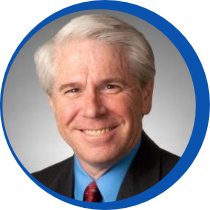
John Reed
Chief Rocket Scientist, United Launch Alliance
John Reed is United Launch Alliance’s Chief Rocket Scientist, and former Senior Technical Fellow for Guidance Navigation and Control. Mr. Reed manages the Technical Fellows program at ULA. He is currently focused on a wide variety of initiatives from Principal Investigator for launch vehicle reuse to enhanced navigation and trajectory planning, from defining our next generation capabilities to creating a culture of innovation and protecting our Intellectual Property. He has been working a variety of roles on launch vehicles in Denver since 1986. Reed is a long-time member of the AAS and an Associate Fellow of the AIAA. He is the Collaboration Program Chair for ASCEND and serves as TC Liaison for the Rocky Mountain Section of AIAA. He received his Bachelor of Science in Aerospace Engineering from the University of Missouri at Rolla (now the Missouri University of Science and Technology) and his master’s degree in Computer Science from the University of Colorado at Boulder.

Principal Architect and Founder
Daniel Inocente
Principal Architect and Founder, DIA
Daniel Inocente, AIA, NCARB is a licensed architect, author, and educator, and the founder of Daniel Inocente Architecture D.P.C., a New York–based practice working at the intersection of architecture, design, and technology. His professional experience spans a broad range of building typologies, including residential, mixed-use and high-rise developments, transportation, and cultural and institutional facilities, alongside research into space habitats and extreme environments.
He is a Professor of Practice in Architecture and Space Architecture, where he teaches design and research studios, and the author of Space Architecture: Principles, Challenges, and Innovations (Wiley). Through practice, research, and teaching, Daniel explores how architectural thinking can meaningfully shape both the present and future built environment.

Vice President
Frank Justice
Vice President, Meridien International Center
Frank Justice leads Meridian’s Open Diplomacy programming, which expands the diplomatic ecosystem by leveraging the contributions and unleashing the expertise of leaders from business, science and technology, sports and culture, and cities and states. He also directs Meridian’s Space Diplomacy Initiative, which strengthens U.S. global partnerships while expanding knowledge of space and international affairs. Through Track 1.5 diplomacy, cross-sector convening, geopolitical training, and professional exchanges, Meridian advances international norms, supports emerging spacefaring nations, and accelerates the global space economy for the U.S. and its allies. Prior to his current roles, Frank served for a decade as Meridian’s Vice President for Diplomatic Engagement and spent another 10 years with Meridian’s Center for Global Leadership administering professional study tours as part of the State Department’s International Visitor Leadership Program. He holds a Master of Public Policy degree from American University as well as a Bachelor of Arts in Political Science from the University of Rhode Island. Frank and his wife reside in Silver Spring, Maryland, with their three daughters.

Space Economy Strategist
Kelli Ogborn
Space Economy Strategist
Kelli Kedis Ogborn’s leadership has played a pivotal role in shaping the trajectory of companies entering and scaling within the space market. With extensive experience in R&D and cutting-edge technology applications for the U.S. government and private sector, her approach integrates technical, policy, and market insight to drive durable competitive advantage, manage risk, and enable sustainable long-term growth within emerging and capital-intensive markets.
In her role as Vice President of Space Commerce and Entrepreneurship at Space Foundation, Kedis Ogborn leads Space Commerce Institute, an initiative aimed at providing valuable insights and actionable programming to empower countries, individuals, and companies to carve out their niche and thrive in the rapidly expanding space economy.
Prior to joining Space Foundation, Kedis Ogborn was President and Chief Operating Officer of Advanced Rockets Corporation (an aerospace company specializing in hypersonic flight), President and Chief Executive Officer of H.S. Dracones (a consulting company specializing in technology commercialization) and was contracted as the Congressional Liaison to the Defense Advanced Research Projects Agency (DARPA). In the DARPA liaison role, she provided advice to senior leadership and technical offices on Congressional engagement strategies to maintain the agency’s position and reputation as a premier science and technology organization.
Kedis Ogborn is an often-published author and speaker on the market applications of innovation and has worked extensively as an authoritative voice within the emerging space economy – qualifying and quantifying the economic drivers and technology trends driving the industry forward and shaping its investment potential and growth. She is also a frequent panel reviewer and technology assessor for the commercialization merit of government R&D proposals and mentor for entrepreneurs.
She holds an International Security and Conflict Resolution Bachelor’s Degree from San Diego State University, a Political Science Bachelor’s Degree from Stockholm University, and a Master’s Degree in Government and Security Studies from The Johns Hopkins University.
Kedis Ogborn has held senior leadership roles across aerospace and advanced technology sectors and is a frequently published author and sought-after speaker on the economic and policy forces shaping the global space economy.

Principal Director of eLab
Kara Cunzeman

Founder
Elizabeth Sanchez Chang
Elizabeth Sanchez Chang is a 3L at American University Washington College of Law and a 2025 Matthew Isakowitz Scholar, with space law experience at companies including Vast and Blue Origin.
She serves as Managing Editor for the Beyond Earth Leadership Council Working Group Reports and is the Founder of the American Space Law Foundation, which is launching the nation’s first American Space Law–based moot court competition this spring to help shape the next generation of American space law through education, community-building, and institutional development.
Her work is guided by a long-term commitment to helping pioneer American space law, ensuring the commercial space sector grows responsibly while pursuing its boldest ambitions.

Principal
Richard DalBello
Vice President, Meridien International Center
Richard DalBello is the Principal of RDB Space, a space business consulting firm.
Previously, he served as Director of the Office of Space Commerce at the U.S. Department of Commerce, where he led efforts to establish a space traffic management system to ensure safe commercial and international civil space operations. He also oversaw the regulation of the U.S. commercial remote sensing industry and advocated for commercial space interests across the federal government.
Before his tenure at the Department of Commerce, Richard was Vice President of Global Engagement at Virgin Galactic, leading international business development for the company’s carrier aircraft and space vehicles. He also served as Director of Space and Aeronautics in the White House Office of Science and Technology Policy (OSTP), advising the President’s Science Advisor on space matters and shaping domestic and international space policies.
Earlier in his career, Richard was Vice President of Government Affairs at Intelsat General and held leadership positions as President of the Satellite Broadcasting and Communications Association and the Satellite Industry Association.
He holds a bachelor’s degree in political science from the University of Illinois, a master’s degree in law from McGill University, and a doctorate in jurisprudence from the University of San Francisco.

Counsellor
Lakshmi Narasimhan Narayanaswamy
Mr. Lakshmi Narasimhan Narayanaswamy is currently Counsellor, Space at the Embassy of India, Washington DC, USA. He is the representative (ISRO Technical Liaison Officer) of Indian Space Research Organization (ISRO), Department of Space, Government of India in USA.
He works to develop India-USA Collaboration in Space under established frameworks in mutually agreed domains since August 2024. Before this assignment, he was a Senior Design Engineer at U. R. Rao Satellite Centre (URSC) of ISRO in Bengaluru, India, which is the lead centre of ISRO responsible for realization of all satellites.
He started his journey as a digital system designer for satellites and has an experience of 20 years working in the field of Engineering and Technology. He holds a Masters in MicroElectronics.
He has keen interest for International Relations development and has contributed to projects of international importance ranging from small satellites to interplanetary missions. His recent contributions include the NISAR and Axiom-4 missions which marked two instrumental collaborations between India and United States in Earth Observation and human spaceflight.

Deputy Director
Michael Overby
Deputy Director, Office of Space Affairs
Bureau of Oceans and International
Environmental and Scientific Affairs (OES)
U.S. Department of State
As Deputy Director for Space Affairs, Mike Overby leads diplomatic efforts to advance U.S. leadership in space and promote civil and commercial exploration of outer space with international partners. Mike’s team leads outreach to advanced and emerging spacefaring nations, opening foreign markets to U.S. space companies and facilitating cooperation between U.S. agencies like NASA and their foreign counterparts. The Office of Space Affairs also shapes global best practices through the Artemis Accords, a set of principles signed by 61 countries to date to promote peaceful, safe, and transparent cooperation in space.
Prior to joining the Office of Space Affairs, Mike led a 40-person team of experts in criminal justice at the Bureau of International Narcotics and Law Enforcement Affairs (INL), shaping over $1 billion in U.S. legal reform and technical assistance programs in 91 countries. Mike also served Branch Chief for INL’s multilateral affairs team, coordinating over 300 U.S. delegations to negotiate international law and policy on cybercrime, corruption, and organized crime. Mike also served as Special Assistant to the INL Assistant Secretary, managed U.S. foreign assistance programs in Afghanistan, and supported democracy programs at the U.S. Mission to the Organization of American States (OAS).
Mike received a M.A. in International Affairs from The George Washington University in Washington, D.C., and a B.A. in Political Science and Spanish from Furman University in Greenville, SC.

Brent Blevins
Brent Blevins serves as staff director of the U.S. House Science, Space, and Technology Subcommittee on Space and Aeronautics. He has been with the committee for nearly seven years. He previously worked for U.S. Senators John Cornyn and Luther Strange, as well as the U.S. House Committees on Natural Resources and Agriculture. He is a native of Southwest Virginia and is a proud alumnus of Virginia Tech.

Aerospace Engineering Executive | Founder
Lisa Wood
Aerospace Engineering Executive | Founder, Sophon Consulting
Lisa Wood is a seasoned aerospace executive with more than 35 years of experience leading and shaping civil space programs across NASA, industry, and academia. Renowned for her strategic vision and deep technical expertise, Lisa has consistently delivered results at the intersection of science, innovation, and public policy.
Throughout her career, Lisa has held senior leadership roles at NASA and industry, most recently serving as Senior Director of Strategic Operations at BAE Systems’ Space & Mission Systems sector. In this role, she led the growth of the company’s civil space portfolio and cultivated key partnerships with NASA and NOAA to advance high-impact space missions and technology development.
Prior to BAE Systems, Lisa held multiple leadership positions at Ball Aerospace, where she guided strategic implementation efforts and secured major roles on NASA science missions in astrophysics, Earth science, heliophysics, and planetary exploration. Her ability to unite government, industry, and academic stakeholders has been a hallmark of her success, enabling her to build coalitions that drive innovation and shape national science priorities. In addition to her career in industry Lisa spent over thirty years at NASA with responsibilities that included international program implementation, space systems technology development and mission formulation.
Lisa is the founder of Sophon Consulting, a science and technology advisory firm focused on helping organizations navigate complex aerospace challenges and accelerate innovation through strategic leadership, science-policy integration, and mission-driven collaboration. Ms. Wood has a B.S. in Aerospace Engineering from the University of Michigan, a M.A. in Science, Technology and Public Policy from the Space Policy Institute at the George Washington University and attended the International Space University in 1989. Passionate about advancing exploration and Earth sciences, Lisa brings a unique blend of technical insight, executive leadership, and policy acumen to every endeavor.
Check Back Soon For
Additional Speakers

About Beyond Earth
The Beyond Earth Institute (www.beyondearth.org) is a non-profit think tank that, along with the stakeholder community, conducts research, provides analysis, makes recommendations, and develops vital insights regarding space policy proposals with near-term and far-ranging implications.